Talent development is the process of improving employees’ skills and knowledge to enhance performance, but to do this effectively, organisations require a structured competency framework. This framework ensures that development acts as a key driver of business agility and growth, rather than just a support task. By investing in skills through such a clear structure, businesses directly improve accountability, transparency and overall performance while preparing staff for future career progression.
A strategic approach to these frameworks must clearly link all employee initiatives to broader organisational objectives while also considering individual ambitions. The aim is to develop your teams in a direction that meets the organisation’s future needs, ensuring that personal growth happens alongside business success.
Understanding Competency Frameworks
To build an effective framework, you need to understand the different types of skills that drive success. Core competencies usually apply to everyone in the company, aligning the entire workforce with the company’s mission and values. These are often “soft skills.” For example, if a company wants a reputation for doing things the right way, a core competence might be “Displays honesty and integrity.”
In contrast, technical competencies are specific to a job or department. A software developer needs specific technical skills, like Python programming, whereas an HR Executive requires a deep understanding of Employment Law.
Finally, behavioural competencies focus on how a person does their job, rather than what they know. These include emotional intelligence and cognitive approaches, such as an HR Executive needing strong conflict resolution skills.
Why Competency Frameworks Matter in Modern Organisations
In the current landscape, employee expectations have changed, with professionals increasingly valuing employability and growth over stability. Modern workers seek organisations that actively invest in their development and view consistent growth opportunities as a key requirement. Consequently,
a highly adaptable workforce is essential, as it allows a company to pivot quickly in response to market changes. This push for agility is moving companies away from once-a-year workshops in favour of continuous, frequent and informal learning methods.
To support this effectively, resources must be allocated to efforts that add value based on the employees’ fundamental needs. Connecting individual growth with company goals creates a shared sense of alignment, collaboration and purpose across all teams.
Step-by-Step Guide to Designing a Competency Framework
Clarify Purpose and Application
Before designing the framework, HR leaders must understand why the organisation needs it and where it will be used. People often link it to performance reviews, but a competency framework is useful for many things. It can help find candidates with specific traits during recruitment, identify training needs, facilitate succession planning, or structure salaries. Knowing the main uses early on stops the framework from becoming a generic document and it ensures it solves specific business problems.
Research and Data Gathering
Once the purpose is clear, HR starts gathering facts to identify which competencies every role needs. There is no standard list or shortcut for this. You must understand the company’s profile, its goals and the skills needed for future success. HR professionals should use different methods to dig deeper, such as looking at past data on KPIs, training and performance. Also, interviewing high performers to see what makes them different from those who struggle is very helpful. This research lets the organisation build a custom library of competencies that reflects reality rather than theory.
Define and Structure Competencies
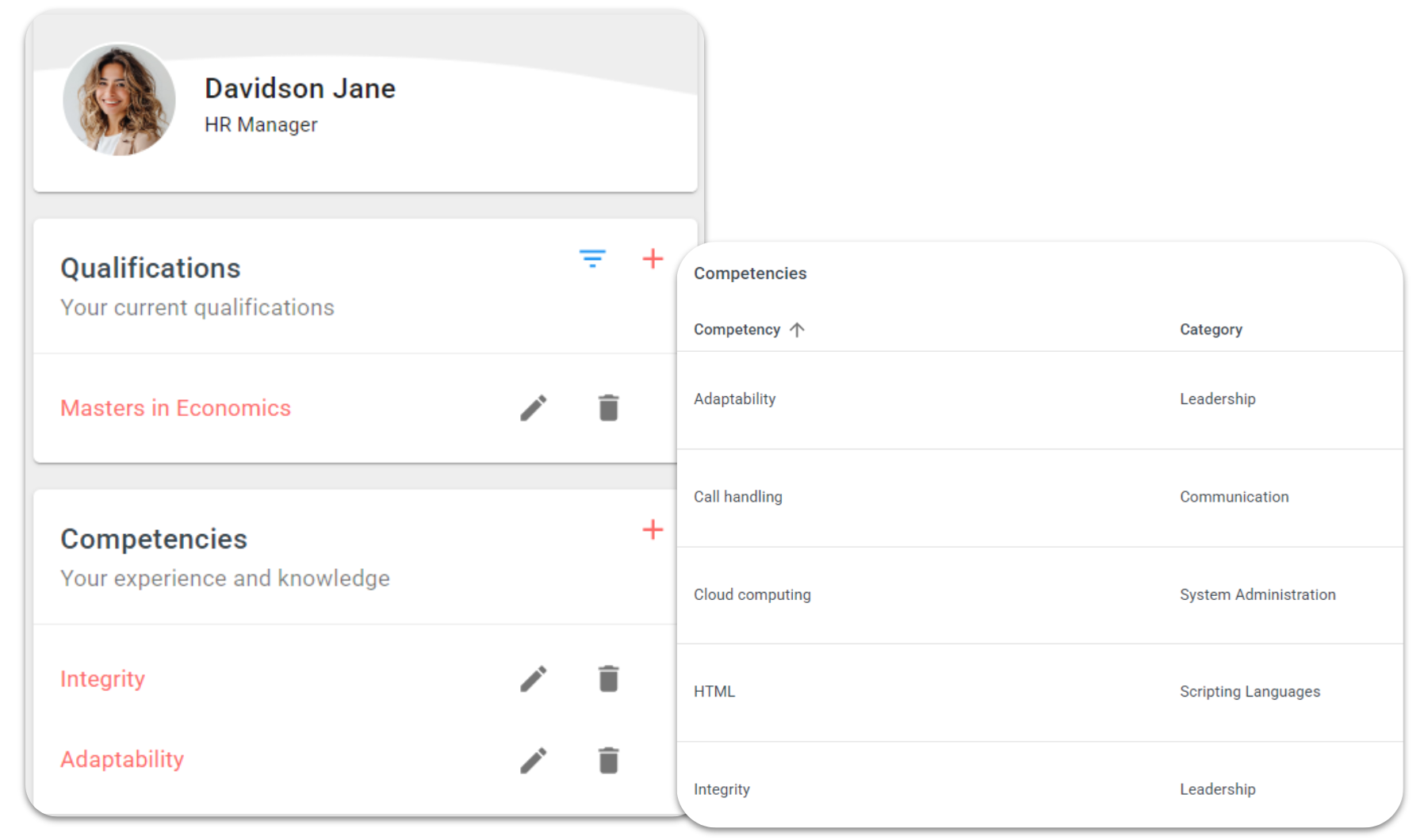
Once the research is done, the organisation can define the structure. This involves listing the competencies each role needs and describing them with clear behavioural indicators. It is not enough to simply list a skill; the framework must define what “good” looks like. For example, for a competency like “Building Relationships,” effective behaviour might be described as “managing expectations and listening deeply to understand a client’s long-term goals.” On the other hand, ineffective behaviour would be “engaging with clients only when trying to make a sale or reacting badly to feedback.” These clear indicators remove confusion and allow employees to understand exactly what is expected of them without needing a rating scale immediately.
Engage Stakeholders and Validate Competencies
Getting support for a new framework is critical. Leaders and managers must champion the initiative, understanding why these competencies matter and how they lead to better hiring and performance assessments. To ensure they buy in, involve stakeholders in the process. Leaders are more likely to support talent projects when they can see the impact. Also, checking the framework with the managers who will use it ensures that the behaviours listed match the daily reality of their teams.
Document and Communicate the Framework
Once the framework is defined, it must be easy to access and understand. Simply uploading documents to a system is a sure way to fail. You need a strong communication strategy to ensure different departments understand the framework. This might involve creating clear one-page guides for employees and managers to cut through the paperwork. The framework should fit naturally into existing HR tasks, so it feels like a helpful tool rather than an administrative burden.
Implementing and Embedding the Competency Framework
Integrating With Performance Management Processes
When integrated in performance management, the framework turns reviews into an ongoing conversation about building skills. At this stage, organisations must standardise reviews by setting structured criteria. For many organisations, a 5-point scale is often the most effective choice due to its simplicity and clarity. While 7 or 10-point scales offer more detail, they can confuse the respondents. A clean 5-point scale, with clear labels for what each point means, reduces confusion and streamlines the process. Most importantly, these scores should be paired with a continuous development strategy and coaching to support decisions about compensation and training.
Technology as an Enabler
Integrated HR software solutions are essential for bringing information together for better reporting and analysis. Automation within these systems reduces the administrative burden, allowing HR teams to focus on strategy. For example, Talexio offers specific modules to support this. The Performance Management module has tools for setting criteria, running peer reviews and tracking key metrics. Complementing this, the Training Management module allows you to create tailored courses, schedule participants, track progress and run self-paced training.
Driving Measurable Impact and Sustainable Growth
To measure success, HR software solutions provide detailed performance score reports that help improve talent strategies. However, return on investment (ROI) should be demonstrated not only in financial terms but also through higher engagement, stronger retention and more adaptable teams.
Integrated data allows companies to see how development leads to real business results. For instance, instead of looking at spending alone, HR can combine training costs with engagement metrics and performance improvements to see the full value of their investment. Organisations need to build an adaptable, future-ready workforce to stay ahead of the competition.
The Strategic Path Forward
A well-defined competency framework turns business targets into a clear guide for employee success. By removing confusion, organisations create a transparent environment where everyone understands exactly what is required to advance. However, a framework only works if it is used daily rather than hidden in a folder. To prevent it from becoming just another document, HR professionals should use platforms like Talexio to help them manage these structures, keeping the focus on development rather than administration.